
At the market
We spend most of our time looking through things on the ground. It really deserves better.

仕入れ

東寺
Kōbō-ichi falls on the 21st of each month at Tō-ji. Antique dealers, farmers, and textile sellers come together every month.
It's not so much the value as it is the feeling. The fabric speaks to us. If we feel we can offer it a new life then we choose it and if not we continue on. The , The patterns colors, textures and motifs all help us to make those connections.
And the people. We often return to the same vendors because relationships are at the heart of everything (and some people know more about fabric). See our current purses on Etsy.
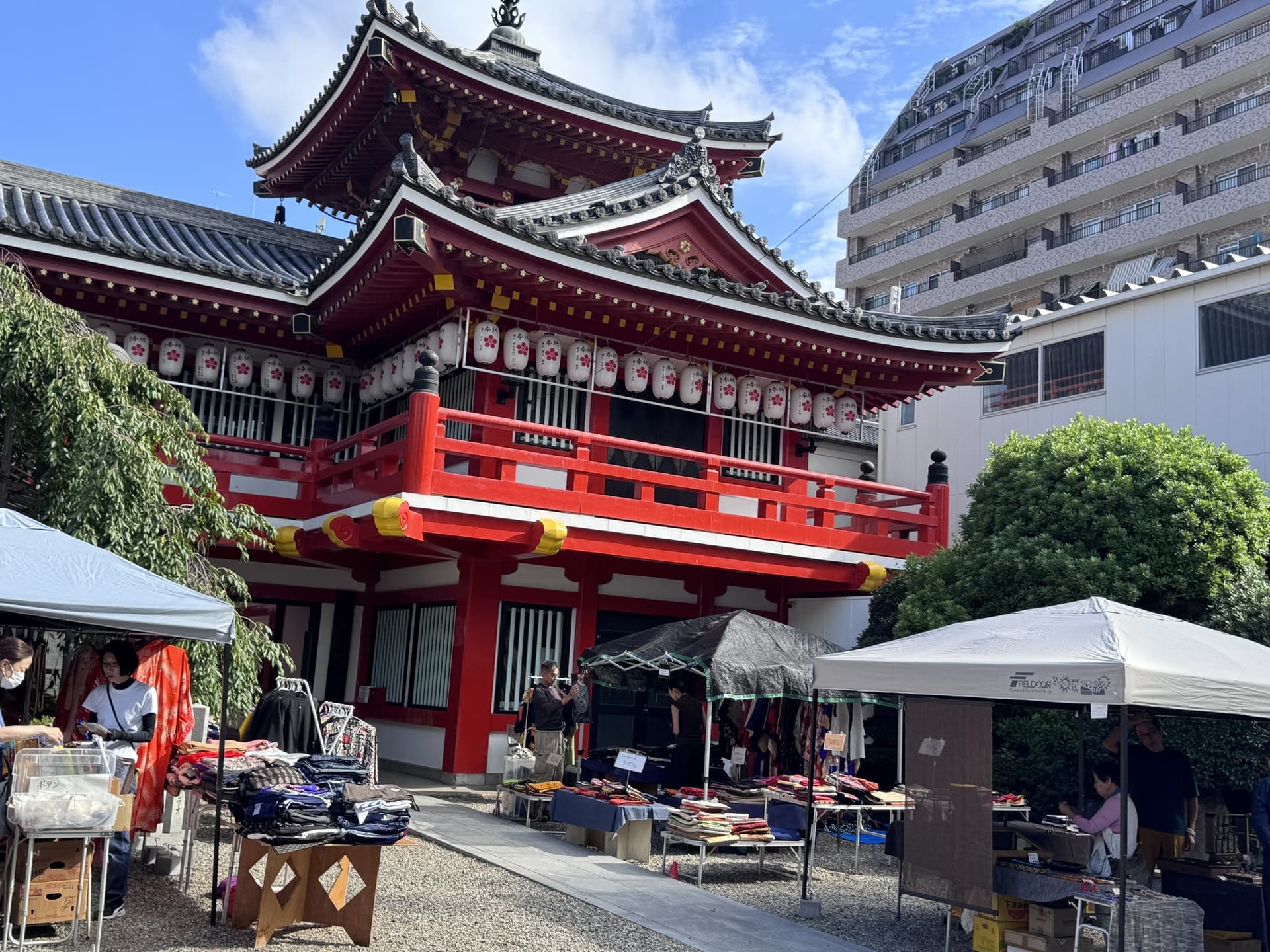
大須
The temple market in Nagoya.
A decent train ride away from Kyoto, this very small market offers really different fabrics from Kyoto. Much more indigo, cotton and boro-boro methods that we really appreciate. So much so that we had to rent a locker to finish shopping.

生地
We can't buy it all. Upcycling takes time and effort. We buy what we have ideas or inspirations for.
And we are in good company in Japan. The upcycling culture is strong and we get encouragement and inspiration from the people we meet. It really feels like a mission we are all on together and the preservation of this work and history is something we are committed to.
収穫
We selected special fabrics that spoke to us. I hope they speak to you too.


人
A few photographs from our most recent trip.

We spend most of our time looking through things on the ground. It really deserves better.

We took some time to try weaving. Most of the fabrics we bring home were all hand woven and the patience that takes deserves respect.
変換
A Kyoto Nishijin obi, orange ceremonial silk in a gold starburst pattern. The same fabric now ready to be loved again.

